

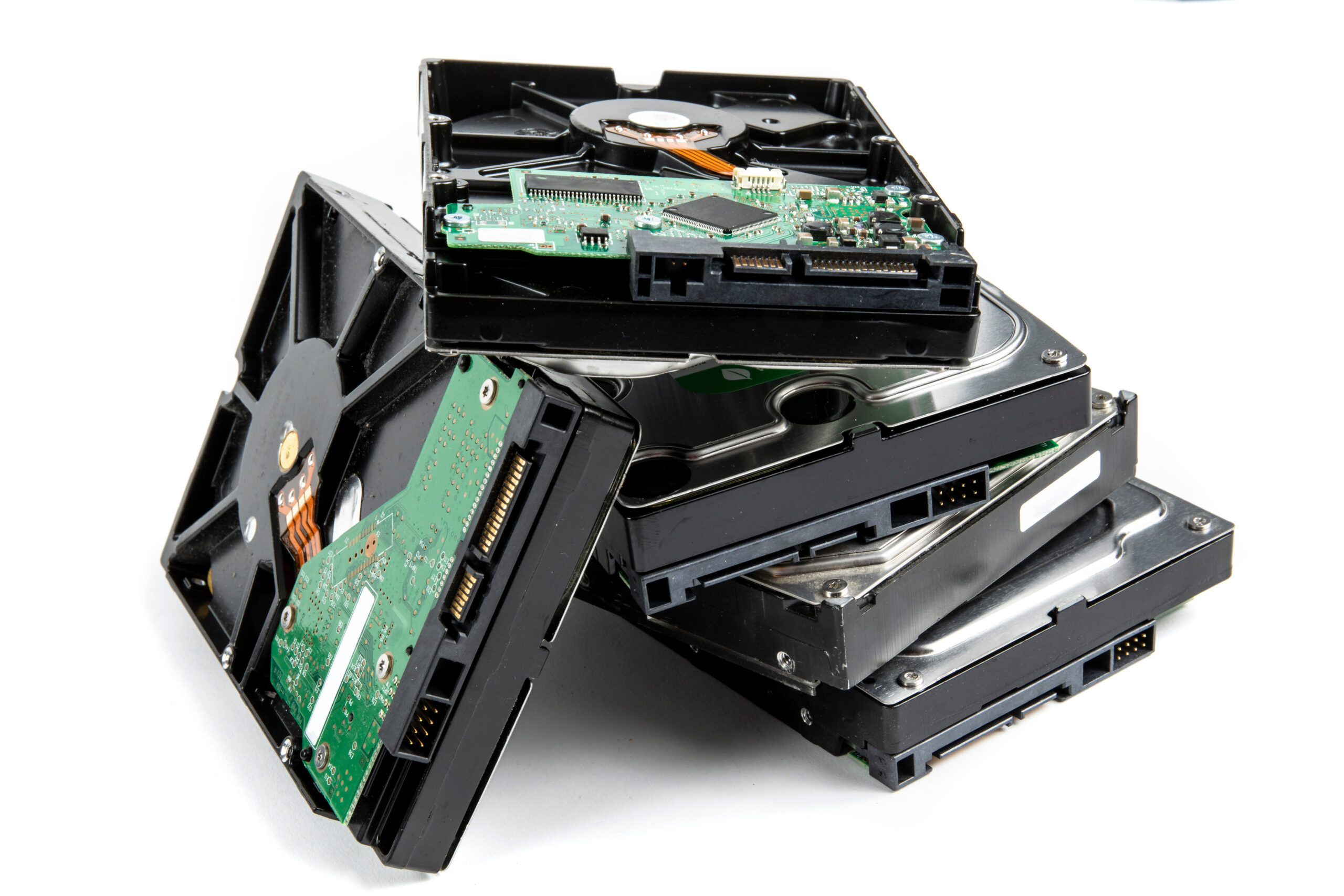
On-Site vs. Off-Site Hard Drive Destruction: Which Is Right for Your Business?
When a hard drive reaches the end of its useful life, the question of what to do with it is not a minor administrative detail. Every drive that passes through a business contains recoverable data until it is physically or cryptographically destroyed. The choice of how to destroy it, specifically whether to do so at your facility using a mobile service or to transport it to a certified off-site destruction plant, carries real implications for security, regulatory compliance, operational cost, and workflow.
Both on-site and off-site hard drive destruction can satisfy the requirements of HIPAA, FACTA, GLBA, and other governing frameworks when executed correctly. The distinction between them is not a question of which method is legitimate and which is not. It is a question of which method is better suited to a specific organization’s data sensitivity profile, volume, logistical constraints, and compliance obligations.
This guide examines both methods in depth: what each involves, where each is stronger, when regulations push you toward one over the other, and how to think through the decision systematically. Understanding the difference between on-site vs. off-site hard drive destruction, and between mobile hard drive destruction and off-site shredding more broadly, is a foundational part of any serious data governance program.
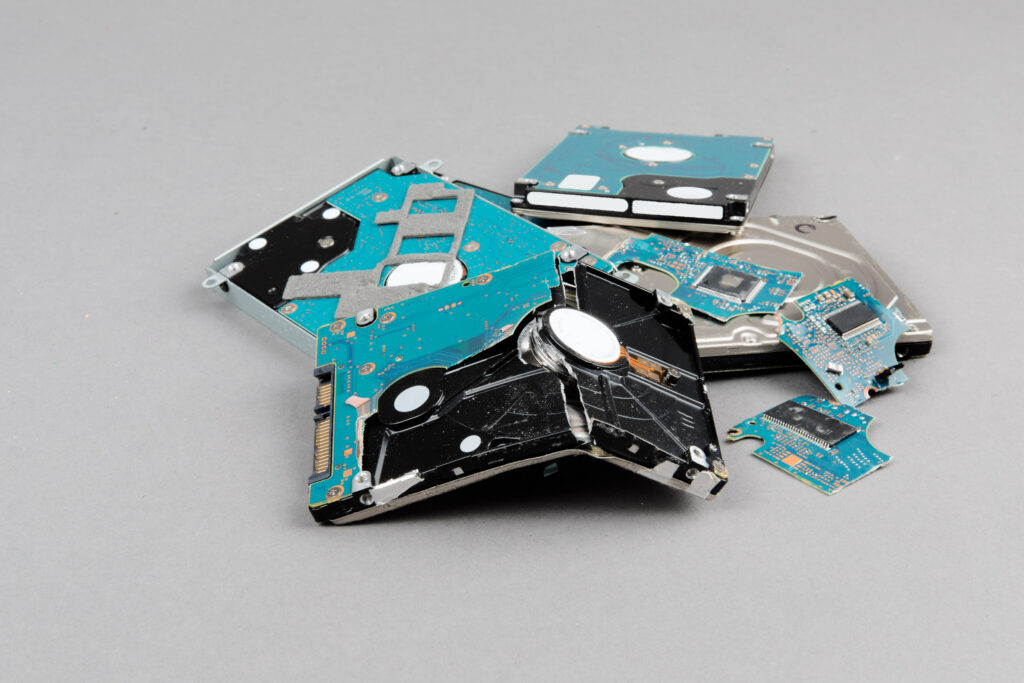
What On-Site Hard Drive Destruction Actually Involves
On-site hard drive destruction, often called mobile hard drive destruction or mobile shredding, brings certified industrial destruction equipment directly to your facility. A technician arrives with a shredding truck or portable destruction unit, collects the drives to be destroyed, and processes them at your location while designated personnel watch.
The physical destruction itself is immediate. Industrial shredders reduce drives to small metal fragments in seconds, rendering any data recovery impossible regardless of the methods available to a sophisticated attacker. Because the process happens at your location, the drives never leave your premises intact. There is no transit window during which an intact drive containing recoverable data is in the possession of a transport vehicle.
At the conclusion of an on-site service, the provider issues a certificate of destruction that documents each destroyed asset by serial number, records the date, time, and destruction method, and identifies the technician who performed the work. This documentation is the legal record of compliant disposal and should be retained according to the specific retention requirements of your regulatory framework.
On-site destruction is particularly valued by organizations that handle classified data, protected health information, or financial records subject to the strictest regulatory scrutiny. The ability to witness destruction in real time, and to confirm that no intact drive left your facility, is the primary operational advantage that on-site services provide.
What Off-Site Hard Drive Destruction Actually Involves
Off-site hard drive destruction involves the secure transport of drives from your facility to a certified destruction plant, where they are destroyed using industrial equipment and documented chain of custody procedures. The drives leave your premises, but under controlled conditions designed to maintain accountability throughout the transit and destruction process.
A reputable off-site provider collects drives in sealed, tamper-evident containers. GPS-tracked vehicles transport the containers to a secure facility that operates under continuous video surveillance and alarm monitoring. At the destruction plant, drives are logged, shredded using the same industrial equipment found on mobile units, and documented with serialized certificates of destruction that account for every asset.
The practical advantage of off-site destruction is capacity. Mobile shredding trucks are efficient, but they have physical limits on the volume they can process in a single visit. For organizations undertaking large-scale hardware refreshes, decommissioning entire server rooms, or managing accumulated drives from multiple locations, an off-site facility can handle volumes that would require multiple mobile visits to clear. The per-drive cost at high volume is typically lower for off-site processing for this reason.
Off-site services are also logistically simpler for organizations with satellite locations or multi-site operations. Rather than scheduling mobile visits to every location, assets can be collected, consolidated, and transported to a single destruction facility under a unified chain of custody.
The Security Comparison: Is One Method More Secure?
The security comparison between on-site vs. off-site hard drive destruction turns on one central question: what is the risk exposure during the window between collection and destruction?
On-site destruction eliminates transit risk entirely. Because drives are destroyed at your facility, there is no period during which intact drives containing recoverable data are outside your control. For organizations with zero-tolerance policies around data leaving the premises, or for those handling data classifications that prohibit transfer, this is the decisive factor.
Off-site destruction, when executed by a NAID AAA certified provider, introduces a defined transit window but surrounds it with documented controls. Sealed tamper-evident containers, GPS tracking, background-checked personnel, chain of custody manifests, and 24/7 monitored facilities are standard components of a credentialed off-site program. Under most regulatory frameworks, this level of documented control is fully sufficient to demonstrate compliant destruction.
Both methods, when performed by a NAID AAA certified provider, can satisfy the requirements of HIPAA, PCI DSS, GLBA, FACTA, and comparable frameworks. The NAID AAA certification is specifically designed to verify that a provider’s processes, from collection through destruction and documentation, meet a rigorous independent audit standard through both scheduled and unannounced reviews.
The practical security difference matters most at the extremes. Organizations managing classified government data, highly sensitive intellectual property, or PHI at healthcare institutions with particularly strict internal policies consistently prefer on-site destruction because witnessed, on-premises destruction provides an additional layer of assurance that no documented chain of custody can fully replicate. For standard commercial data governance needs, a well-credentialed off-site provider is equally defensible.
Compliance Implications: When Regulations Influence the Choice
Most of the major regulatory frameworks governing data destruction in the United States do not mandate a specific destruction method. They mandate outcomes: data must be rendered unrecoverable, and the process must be documented. The choice between on-site and off-site is left to the organization, provided the chosen method achieves those outcomes under a certified and documented process.
HIPAA’s Security Rule requires covered entities to implement policies for the disposal of electronic protected health information and the hardware on which it is stored. It does not specify on-site versus off-site. What it requires is that whatever method is used renders ePHI irretrievable, and that a Business Associate Agreement exists between the covered entity and the destruction vendor. HIPAA violations related to improper media disposal carry average penalties of approximately $2.3 million per incident, making the documentation and certification components of any destruction program critically important regardless of method.
FACTA’s Disposal Rule requires businesses handling consumer information to take reasonable measures to prevent unauthorized access during disposal. Physical destruction by a certified provider satisfies this standard whether the destruction occurs on-site or at a secure facility. The key is working with a provider whose certifications and processes can be demonstrated during an audit.
GLBA’s Safeguards Rule, PCI DSS Requirement 9.8.2, and SOX internal controls frameworks similarly focus on outcomes and documentation rather than the physical location of destruction. For organizations subject to multiple overlapping frameworks, a provider that issues serialized certificates of destruction, maintains detailed chain of custody records, and holds NAID AAA certification provides audit-ready documentation for all of them simultaneously.
Where regulations do tend to push toward on-site destruction is in sectors managing federal or defense data. Contractors handling Controlled Unclassified Information under CMMC frameworks, and federal agencies subject to NIST SP 800-88 requirements, often operate under policies that restrict data from leaving a controlled environment before destruction. In these contexts, on-site mobile destruction is less a preference and more a compliance requirement.
Volume and Logistics: When the Volume Decides for You
For many organizations, the most practical determinant between mobile hard drive destruction and off-site shredding is neither security nor compliance. It is volume.
Mobile destruction services excel at routine, scheduled work and one-time purge events of moderate scale. A law firm retiring a server, a medical practice clearing a batch of end-of-life workstations, or a financial services branch completing an annual hardware refresh are all good candidates for mobile on-site destruction. The drives are destroyed while staff observe, the certificate is issued the same day, and the operation is complete without drives ever leaving the building.
Off-site facilities are better suited to high-volume scenarios. Large enterprises decommissioning entire data centers, healthcare networks clearing storage from multiple facilities, or financial institutions managing multi-year hardware archives can generate volumes that a mobile truck cannot efficiently handle in a single visit. Sending consolidated shipments to a certified off-site facility allows for faster processing at lower per-unit cost.
Multi-site organizations face a related logistical consideration. Scheduling mobile visits to ten different office locations is operationally complex and expensive. Consolidating drives from those locations into secure containers, having them collected and transported to a single off-site facility, and receiving one unified certificate of destruction for the entire batch is often more efficient. This is particularly relevant for organizations that do not generate sufficient volume at any single location to justify a dedicated mobile visit.
Cost Comparison: What to Expect From Each Format
Hard drive destruction pricing varies by provider, volume, geography, and service level. Understanding the general cost structure of each model helps organizations set realistic expectations when requesting quotes.
Per-drive pricing for professional destruction typically ranges from $7 to $20 per drive across the industry. On-site mobile services tend to sit toward the higher end of this range for small-to-moderate volumes, because the cost of dispatching a mobile unit, including the technician’s time, fuel, and equipment depreciation, is spread across fewer drives. Many providers impose minimum service charges for small jobs, often in the range of $75 to $150, regardless of drive count.
Off-site destruction tends to offer better per-unit economics at higher volumes. When a provider can fill a vehicle and process a large batch through an established facility in a single run, the fixed costs are distributed across more units. Organizations destroying hundreds of drives at once will typically see meaningfully lower per-drive costs through an off-site program than through mobile services.
The cost comparison should also account for the value of staff time. On-site destruction requires that someone at your facility be available to receive the technician, observe destruction, and sign off on the certificate. For small, infrequent jobs this is a minor imposition. For organizations managing ongoing hardware disposal programs, the logistical overhead of scheduling and supervising repeated mobile visits has real operational cost.
One additional cost factor worth noting: data breaches, not destruction services, are what most organizations should be pricing against. According to IBM’s 2025 Cost of a Data Breach Report, the average cost of a data breach in the United States reached $10.22 million. The cost of certified hard drive destruction, whether on-site or off-site, is a fraction of that figure. The question is not whether certified destruction is affordable; it is which format delivers the appropriate level of protection at the best operational value for your specific situation.
The Decision Framework: Four Questions That Determine the Right Choice
Most organizations do not face a binary choice between on-site and off-site hard drive destruction. They face a question of which method to deploy as their primary approach, and whether a blended program makes sense. Four questions clarify the decision.
The first question is: how sensitive is the data on the drives you are retiring? Organizations managing classified government data, PHI in healthcare settings, or regulated financial records under strict internal policy constraints benefit most from witnessed on-site destruction. The ability to confirm, in real time, that no intact drive left the premises is worth a premium for organizations where that assurance is operationally or contractually required.
The second question is: how many drives are you destroying, and how often? Low-to-moderate volumes of infrequent jobs favor on-site mobile services. High volumes, recurring programs, or consolidated multi-site events favor off-site processing. If you are retiring ten drives a year, a mobile visit makes operational sense. If you are retiring five hundred drives as part of a data center refresh, an off-site facility is almost certainly more efficient.
The third question is: what does your regulatory framework actually require? Most frameworks accept either method when performed by a certified provider with documented chain of custody. If your compliance obligations are driven by HIPAA, FACTA, GLBA, or PCI DSS, your obligation is to the outcome and the documentation, not to a specific destruction location. Verify with your compliance team whether any specific contractual or policy language restricts your choice before selecting a method.
The fourth question is: do you have the internal bandwidth to manage the logistics of the method you are considering? On-site destruction requires scheduling, reception, observation, and sign-off. Off-site destruction requires proper packaging, secure container management, and chain of custody tracking. Neither is operationally burdensome when done routinely, but organizations with lean IT and compliance teams should factor administrative overhead into the comparison.
Conclusion
The question of on-site vs. off-site hard drive destruction does not have a universal answer. It has a correct answer for each organization based on its data sensitivity, operational scale, regulatory context, and logistical capacity.
On-site mobile hard drive destruction is the best hard drive destruction method for organizations that need witnessed, on-premises confirmation that data never leaves their facility intact. It is the preferred approach for healthcare providers managing PHI, government contractors handling restricted data, and any organization whose internal policy or compliance framework treats transit risk as categorically unacceptable.
Off-site destruction is the better fit for high-volume scenarios, multi-site consolidation programs, and organizations whose compliance framework is satisfied by a documented chain of custody from a NAID AAA certified provider. It delivers lower per-unit cost at scale and greater logistical flexibility for distributed organizations.
For many businesses, the answer is not either/or. A blended program that routes the most sensitive assets through on-site mobile destruction and sends routine hardware refresh volumes through an off-site facility is a practical and cost-effective approach used across healthcare, financial services, legal, and enterprise environments.
The constant across both models is the provider’s certification and documentation practices. A NAID AAA certified provider maintains audit-ready chain of custody records, serialized certificates of destruction, and independently verified processes regardless of where destruction occurs. That certification is not a marketing credential. It is the foundation of a defensible compliance posture.